
How to select a Mid-Sized Family Car
This beginner’s guide has been written for friends and family who are in the market for a car but may be confused by the different options available. I have reviewed and compared Mini SUVs, Hatches, Wagons and Sedans below. I have excluded larger 4WDs, large Sedans, People Movers, Utes, Sports Cars, Coupes, Cabriolets and Luxury Cars from the scope of this review.
Mini SUV & Baby SUV
This category is very popular with families as they are great for lifting a sleeping child or stroller without needing to bend down as much! They are also handy for taller, bulkier or less mobile passengers who may find it difficult to stoop down. Features include higher driving position providing more visibility, higher ground clearance with bigger wheels. Mini SUVs usually have a good boot size especially in terms of height and the back seats can usually be folded down for oodles of space. They are also are often available with all wheel drive for extra safety and better handling in the wet, camping, etc. Some good examples are the Mazda CX5, Toyota RAV4, Suzuki Vitara, Renault Koleos, Hyundai ix35, Audi Q5 & BMW X3. Baby SUVs include the Mazda CX3 & Audi Q3 are an even newer category but may possibly be too small to be practical and provide adequate shelf life for a growing family. The only downside with SUVs is that they can tend to be less car-like in their dynamics and driving experience due to their shape although they are not as bad as larger SUVs.

Hatchbacks & Liftbacks
Hatches are highly practical car in terms of size, parking and maneuverability and these days they are increasingly becoming a mid-sized car as the cabin size has progressively increased. You can usually also fold the back seats completely flat to have tons of boot space. They are lower to the ground than a Mini SUV, generally more zippy and more economical on fuel. However, they may not be as safe as the Mini-SUV due to their smaller size. Back seat room can possibly be a bit cramped as the kids grow bigger and they tend to be front wheel drive. Good examples of hatches are the VW Golf, Mazda 3, Hyundai i30, Fiat 500. A Liftback is a type of Hatch where the boot is lifts entirely up including the glass window. Liftbacks are styled to look a bit more like a sedan but have ute like space. Some good examples of Liftbacks are the Mazda 6 and Audi A5.

Wagons or Estates
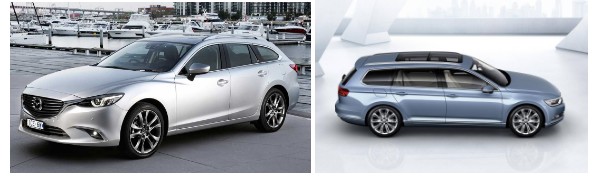
More popular in Europe but increasingly popular here, the Wagon was one of the original family car in the eighties well before the advent of the Mini-SUV, 4wd or people mover. Wagons have had a bit of a renaissance of late as they are more sporty and stylish than the SUVs and can have high performance versions too. They provide massive boot space, look good with roof racks and provide car like comfort and handling. They are great if you have pets, well suited to longer road trips and all wheel drive is a common option. They’re not as popular in Australia as the Mini-SUV which could affect resale value. Their extra length could also pose parking issues in more confined spaces. Good examples of wagons are Subaru Liberty, Mazda 6, VW Passat, Hyundai i40 and Audi A4.
Sedans
This is a more conventional car like shape that you would more commonly find. Boot space is a bit more narrow and rigid but sedans are generally very comfy and spacious for passengers. The mid sized sedans of today are far bigger than they used to be and have replaced the larger family sedans of yesteryear. Sedans are generally available in front or rear wheel drive although some manufacturers provide all wheel drive options. The back seats can sometimes fold back 60/40 split fold but storage is generally less with sedans. Good sedan examples are the Mazda 6, Hyundai i40, Toyota Camry and Subaru Liberty

Fuel Types – Petrol vs Diesel vs Hybrid
This is a whole separate article / topic but here’s a rough beginner’s guide
Petrol
+ More refined, Less Engine Rattle, Lower Emissions per km, Greater range of Cars available, Lower risk of putting the wrong fuel
– Lower Fuel Economy than Hybrids or Diesels, Less Torque at Lower End of Revs
Diesel
+ Uses less fuel than petrol engines providing up to 20% better mileage, Up to 20% lower cost than Premium Unleaded Petrol, Great Low-end Torque, Diesel Rattle usually not discernible inside Modern Cabins, Less Price Volatility
– Higher Risk of putting the wrong fuel, Higher Emissions per km although this is somewhat offset by Better Overall Mileage as less fuel is used
Hybrid
+ Greener, Quieter, Highly Economical
– Limited Range of Cars to choose from, Costlier to buy Upfront
Standard Features
The following features are now considered standard features and will increase the value of your car. If they are not included, they may also affect your car maintenance costs, future resale value as well as compromise on your driving experience.
- Cruise Control
- GPS Satellite Navigation
- Reverse Camera + Front & Rear Parking Sensors
- Bluetooth Audio & Mobile Hands-Free
- Electronic / Dynamic Stability Control
- Minimum 5 Year New Car Warranty
- Good Fuel Economy (Less than 7L / 100km)
- Fixed Price Servicing
- Metallic Paint
Bonus Features
Useful bonus features are listed below. These can be handy when comparing vehicles or deciding which model to go for. Some of them may also be available as an add-on “pack” for existing models that may not have those features.
- Digital Speedometer
- Lane Assist Warning
- Blind spot Detection
- Emergency Braking
- Keyless Entry
- Push button start
- Remote boot release / Electronic Tailgate
- Electronic handbrakes
- Full Sized Spare Wheel
- Heated Seats
- Seat Memory
- Folding Mirrors
 ganesh's blog
One thought on “How to select a mid-sized family car”